Healthy Diet, But Little Progress in Training? | Hardworkout Magazine
Key takeaways
- Around 1.6 grams of protein per kilogram of body weight per day is a good starting point for people who train strength.
- Total energy intake must match the goal: a deficit to reduce body fat percentage, and enough energy to build muscle.
- A nutrient-rich diet can supply both too much and too little energy, because nuts, avocados, and oils are energy-dense while vegetables and lean protein make it hard to eat enough.
- Leucine helps activate mTORC1, the signalling pathway that regulates muscle protein synthesis, but the other essential amino acids must also be available.
- Total daily protein intake matters more than hitting a specific amount at each individual meal.
You can eat healthy and varied, yet still not achieve the progress you want from your training. This does not necessarily mean that you should replace the food you are already eating.
Why does a healthy diet not always give results in training?
A diet that works well in everyday life may still need adjustments when the goal is to build muscle, reduce body fat percentage, or perform better in training.
How to adjust your diet to your training
What should you change when your diet is already healthy?
A healthy and varied diet may still need adjustments to fit your training and goals.
The total energy intake must match the goal, whether you want to reduce body fat percentage, build muscle, or perform better.
Read more Read less
Protein, fat, and carbohydrates have different functions, and the distribution should be adapted to the training volume and energy needs.
Around 1.6 grams of protein per kilogram of body weight daily is a good starting point for those who train strength.
Protein should be distributed over several meals, and leucine plays an important role in regulating muscle protein synthesis.
Carbohydrates are particularly important during intervals, longer endurance sessions, and high-volume strength training.
A meal with protein and carbohydrates 2-3 hours before training can help ensure you have enough energy for the session.
After training, you should eat protein and carbohydrates, either as a meal or a smaller snack if dinner is later.
How much energy should you eat to reach your goal?
The total energy intake is very important.
If you want to reduce body fat percentage, you must consume fewer calories than you burn over time. Conversely, if you want to increase body weight and build muscle, you need to get enough energy. The intake must cover both daily energy needs and training.
A nutrient-rich diet can provide both too much and too little energy. Nuts, avocados, and oils are good sources of fat but contain a lot of energy in small portions.
Conversely, large amounts of vegetables, lean protein sources, and other foods with low energy content can make it difficult to eat enough. This is especially relevant if you train a lot and have a high energy requirement.
(The article continues under the advertisement)


How should protein, fat, and carbohydrates be divided?
When the energy intake matches the goal, you should look at the distribution between protein, fat, and carbohydrates.
The need varies with body weight, type of training, and training volume. The goal also matters. Someone who wants to build muscle does not necessarily have the same needs as someone who wants to reduce body fat percentage.
For those who train strength, around 1.6 grams of protein per kilogram of body weight per day is a good starting point.
Fat should also not be unnecessarily cut. Fat provides essential fatty acids and is necessary for the absorption of vitamins A, D, E, and K.
Good sources of unsaturated fat include nuts, seeds, avocados, olive and rapeseed oil, and fatty fish.

The rest of the energy needs can largely be covered by carbohydrates. The amount should be adjusted based on how much and how hard you train.
Carbohydrates become more important during intervals, longer endurance sessions, and high-volume strength training.
The distribution also affects how well the meals satisfy hunger. Protein has a high satiety effect, while fat slows down digestion.
Additionally, fiber-rich carbohydrate sources can help prolong satiety. This is especially relevant when you are in a calorie deficit.
[](https://hardworkout.no/usikker-pa-hvilket-proteinpulver-du-trenger-les-dette-forst/)

Diet Unsure about which protein powder you need? Read this first
Sep 02, 2026
How many protein meals a day do you need?
Even if the total protein intake is high enough, how protein is distributed throughout the day also matters.
Strength training stimulates the muscles to adapt to the training. Protein simultaneously provides the amino acids needed to form new muscle proteins.
The essential amino acids act as building blocks in this process. Leucine also plays an important role. The amino acid helps activate mTORC1, a central signaling pathway that regulates muscle protein synthesis (MPS).
The other essential amino acids must also be available for new muscle proteins to be built.
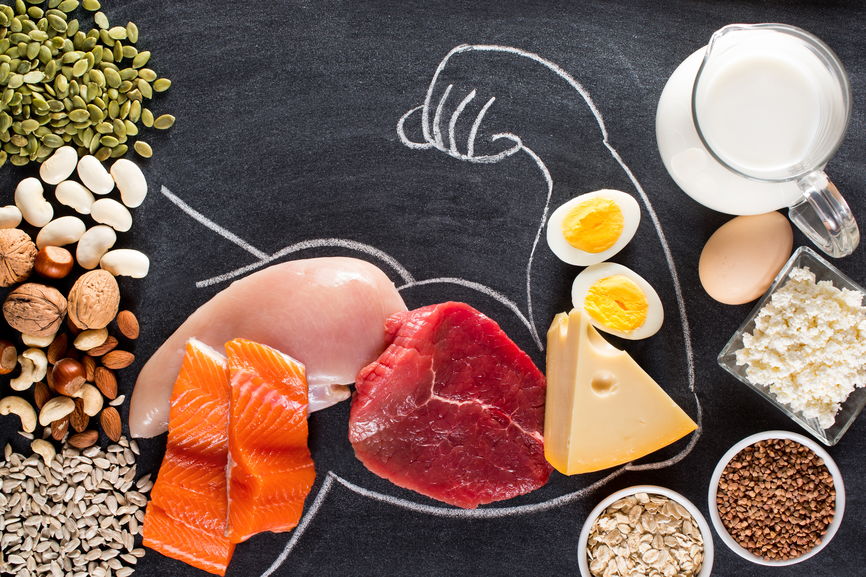
Good sources of leucine include milk and dairy products, eggs, meat, fish, and whey protein.
Leucine is also found in plant-based protein sources such as soy, peas, beans, and lentils.
A protein-rich meal increases MPS for a few hours before it gradually decreases again. Therefore, it is sensible to distribute protein intake over several meals throughout the day. A large portion of the daily intake should not be concentrated in a single meal.
The total protein intake throughout the day is still more important than hitting a specific amount at each meal.
[](https://hardworkout.no/slik-pavirker-ulike-typer-karbohydrater-blodsukker-og-prestasjon/)

Diet How different types of carbohydrates affect blood sugar and performance
Sep 02, 2026
What should you eat before and after training?
The timing of meals can affect both performance and recovery.
If it has been many hours since you last ate, low available energy can make it harder to maintain intensity. It can also make it more difficult to complete the session as planned.